In a servo-hydraulic system, it is usually important that the hydraulic connection between the valve and cylinder is as short as possible and is made of pipe instead of hose. Otherwise, the energy from the valve may be absorbed and release by the hose, causing oscillation (see the Hose vs. pipe topic).
In some situations, it is acceptable to use a short section of hose, especially if the valve is not able to be mounted on the cylinder and the cylinder moves relative to the valve.
In these situations, use of a high-pressure hose with minimal expansion is recommended.
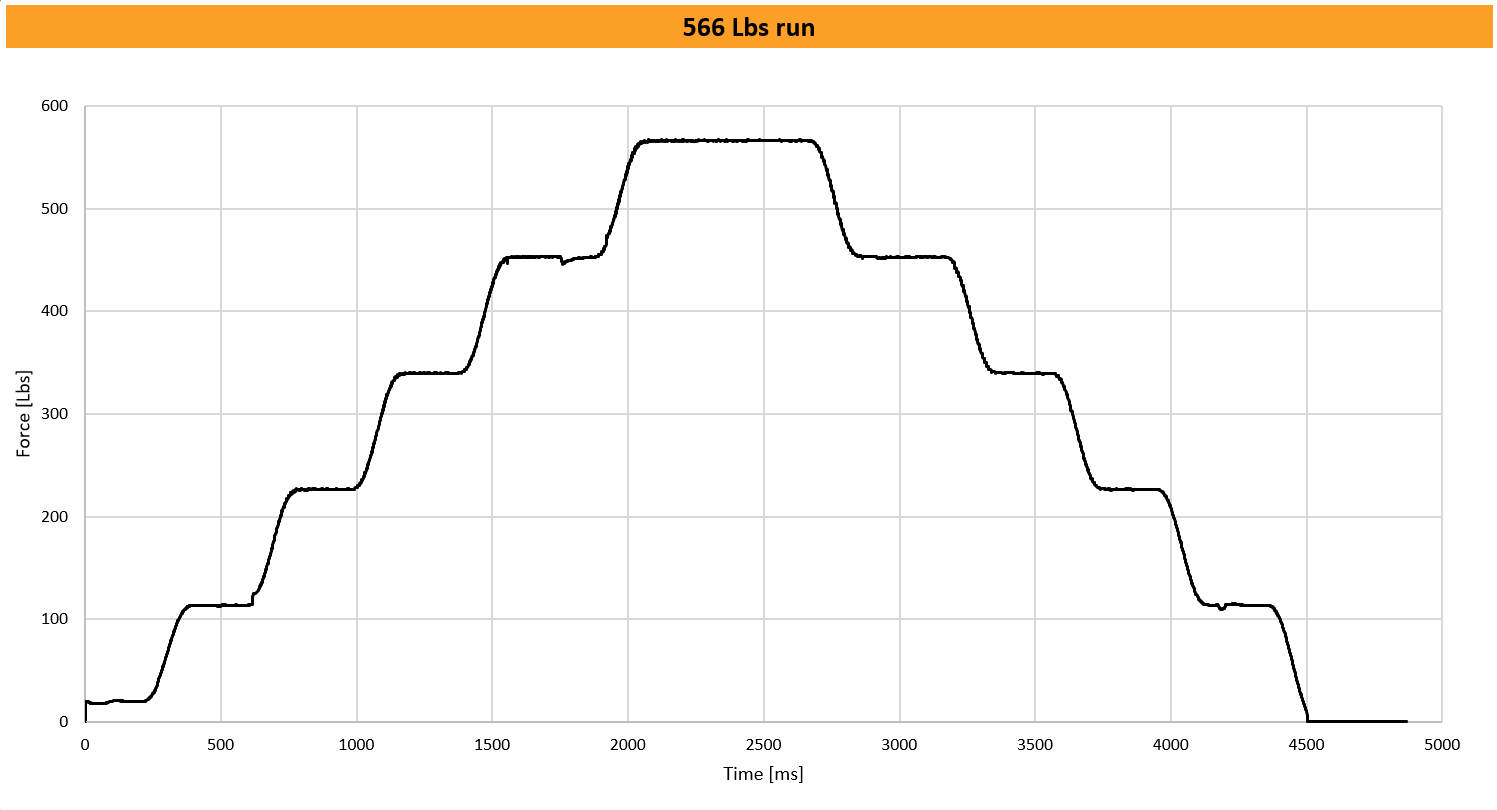
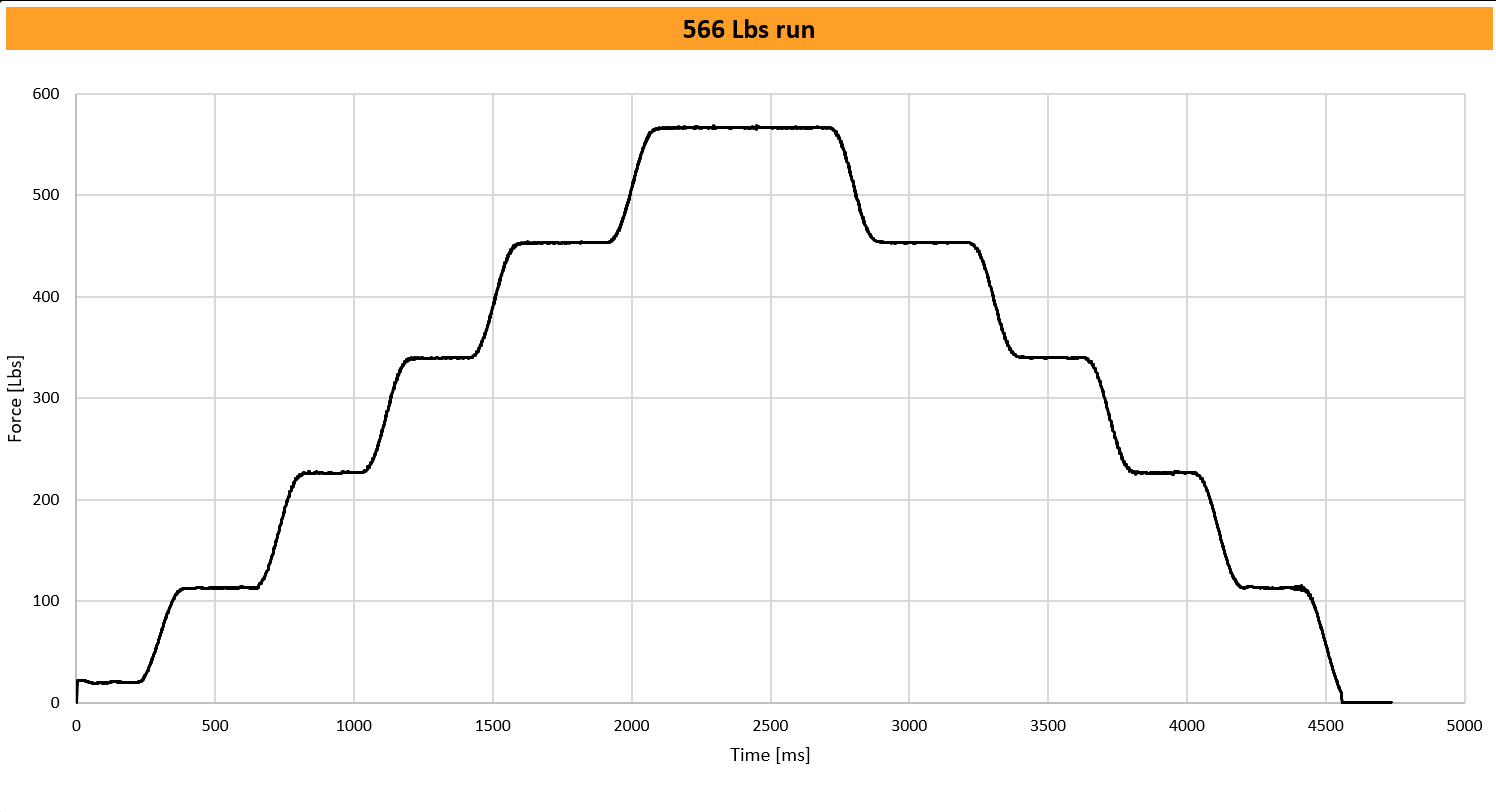
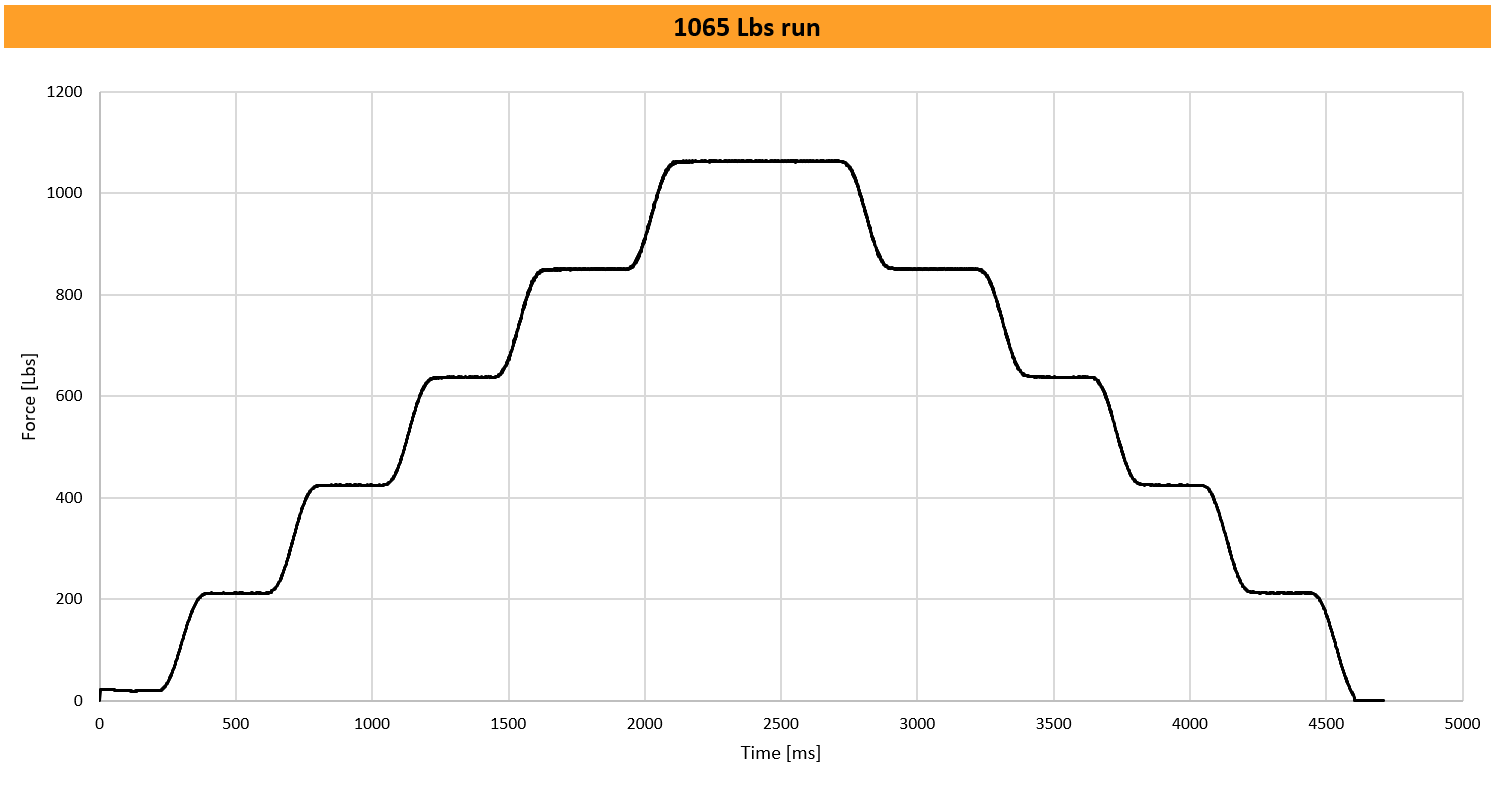
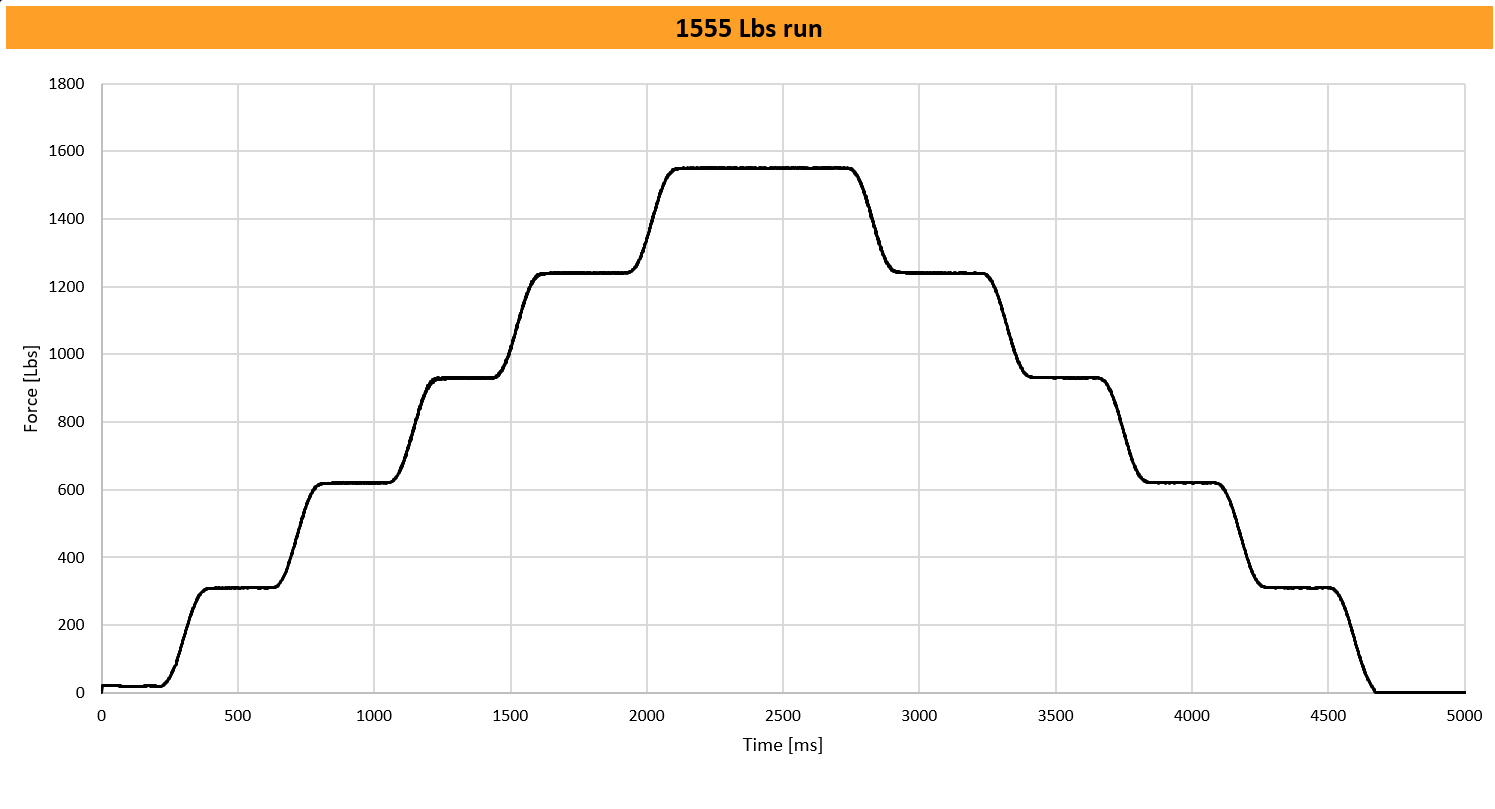
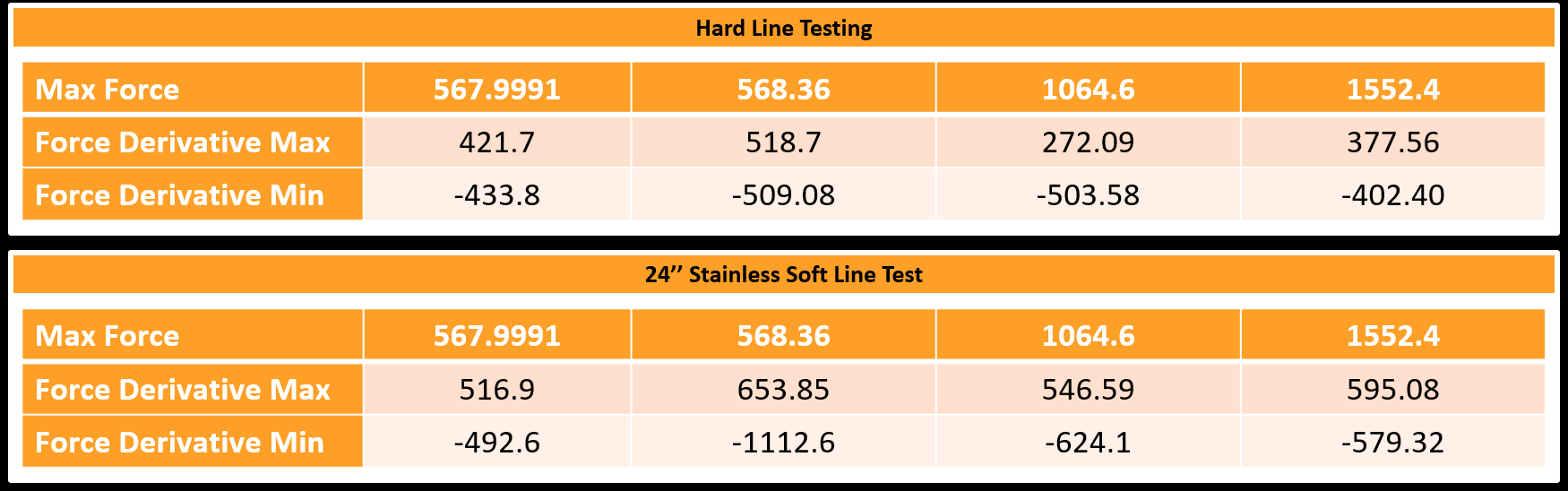
Here is some information from a customer that tested various lengths of of 6000 psi steel braided hose and compared it with hard pipe. The customer concluded:
- In Static Loading Applications the peak-to-peak oscillations scale linearly with the length of the line.
- Induced shocks on the line didn’t appear in the graph
- Still managed to stay well within our expected tolerance range
- PID didn’t require much extra tuning, just a little over dampening compared to the pure hardline setup.
The customer captured the following data:
If it is impossible to avoid using long lengths of hose and the system oscillates, Delta Motion’s RMCs have algorithms to help compensate. For details, see Controlling Underdamped Systems.